The Fan-Out Ingestion Pattern
Sometimes a single ingestion step reads one external source and produces rows in
several tables at once — for example, parsing one acquisition file into
Subject, Session, and Recording records. This is the fan-out ingestion
pattern. It is a deliberate, sanctioned exception to DataJoint's usual dependency
structure. This page explains what it steps outside of, and the responsibility it
carries in return.
The shape
An ingestion routine — typically an Imported table's make(), or a manual
loader — reads one source and inserts into several entry-point tables
(Manual or Imported) that are not foreign-key children of the ingesting
table:
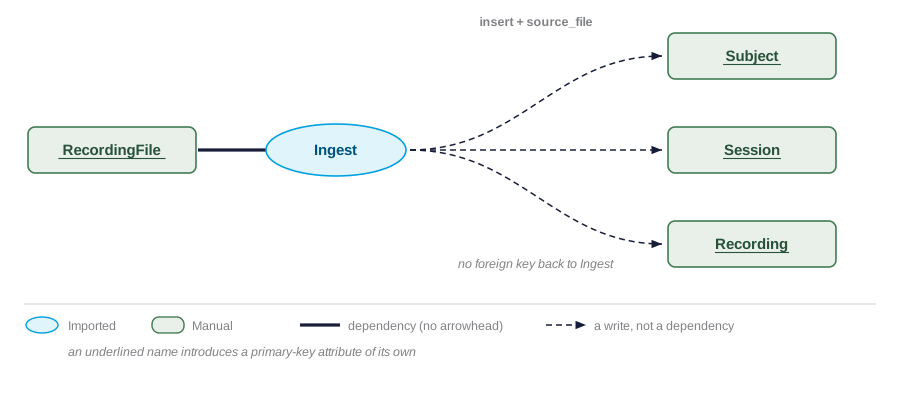
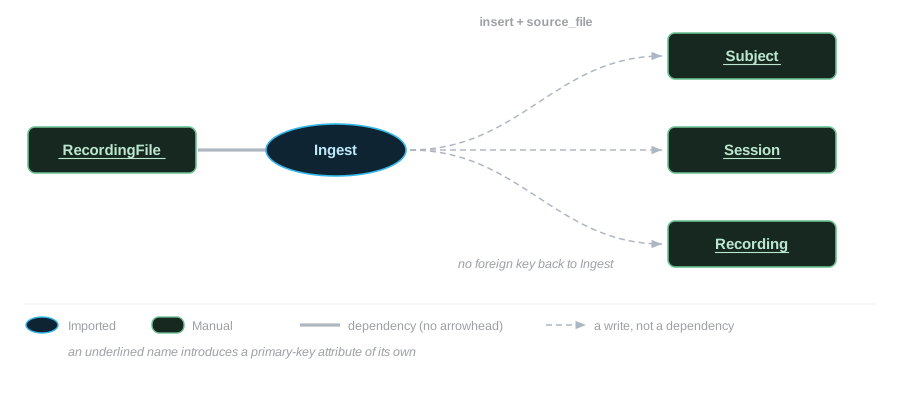
The figure shows what the dependency graph does not: dj.Diagram pointed at this
schema renders Subject, Session, and Recording as three unconnected nodes,
because there is no foreign key for it to follow. The dashed arrows are the writes
that the graph cannot record.
@schema
class RecordingFile(dj.Manual):        # the source record
    definition = """
    file_id : uuid
    ---
    path    : varchar(255)
    """

@schema
class Ingest(dj.Imported):
    definition = """
    -> RecordingFile
    """
    def make(self, key):
        meta = parse(RecordingFile & key)
        # fan out into several entry-point tables that have no FK back to Ingest
        Subject.insert1({**meta.subject, "source_file": key["file_id"]})
        Session.insert1({**meta.session, "source_file": key["file_id"]})
        Recording.insert1({**meta.recording, "source_file": key["file_id"]})
        self.insert1(key)
It steps outside direct referential integrity — explicitly
Normally every derived row is a foreign-key child of the rows it came from, so
the dependency graph itself is the record
of what produced what. In fan-out ingestion, the tables the routine populates
carry no foreign key back to the ingesting table. The link from a Subject
row to the file it was parsed from is therefore not established in the schema
graph — direct referential integrity to the source is deliberately not created.
This is done on purpose, and being explicit is what makes it acceptable. Binding these entry-point tables by foreign key to a fast-moving ingestion step would marry the stable domain model to changeable infrastructure — every change to how data is loaded would become a schema migration, and every row would permanently carry whichever loader existed when it was created. The pattern avoids that by declining the FK on purpose, rather than letting an undeclared dependency slip in unnoticed.
The origin is recorded for you, and modelled by you
Because the foreign-key link to the source is absent, the traceability it would have provided has to come from somewhere else. Two things supply it, and they do different jobs.
DataJoint records the origin automatically. Every row written into a Manual
table carries a hidden _prov attribute, and a row written from inside an
ingesting make() records the ingesting table and its key — exactly the link the
missing foreign key would have carried. Nothing in the make() body asks for
this, and nothing can forge it: the attribute is framework-owned and no insert
can set it. What it records beyond that comes from deployment configuration —
the external system, the connecting user, the time, the code version. See
Extrinsic Provenance at Entry Tables.
You model the link the pipeline itself needs to query. Hidden attributes are
deliberately excluded from query composition, so _prov cannot be joined or
restricted on the way an ordinary attribute can. Where downstream code has to
follow the row back to its source — and in the example above it does — keep the
source_file column. _prov is the audit record; the modelled column is the
domain link.
Beyond recording the origin at the point of entry, the rest — retention, audit trails, cross-system exchange — is left to the provenance and governance systems a pipeline interoperates with; see Comparison to Provenance Systems.
When to use it
- Use fan-out when one source legitimately populates several independent entity tables, and making those tables foreign-key children of the loader would distort the domain model or turn every ingestion change into a schema migration.
- Prefer ordinary foreign-key dependencies when the produced rows are genuine derived results within the pipeline — there the structural link is exactly what you want, and fan-out would throw away traceability you could have kept.
Reserve fan-out for the ingestion boundary, where the pipeline meets the outside world; keep everything downstream of that boundary bound by foreign keys.
See also
- Computation Model — the
make()contract andpopulate() - Comparison to Provenance Systems — the external-origin concern DataJoint leaves to provenance systems
- Entity Integrity — the referential-integrity guarantees fan-out deliberately steps outside